
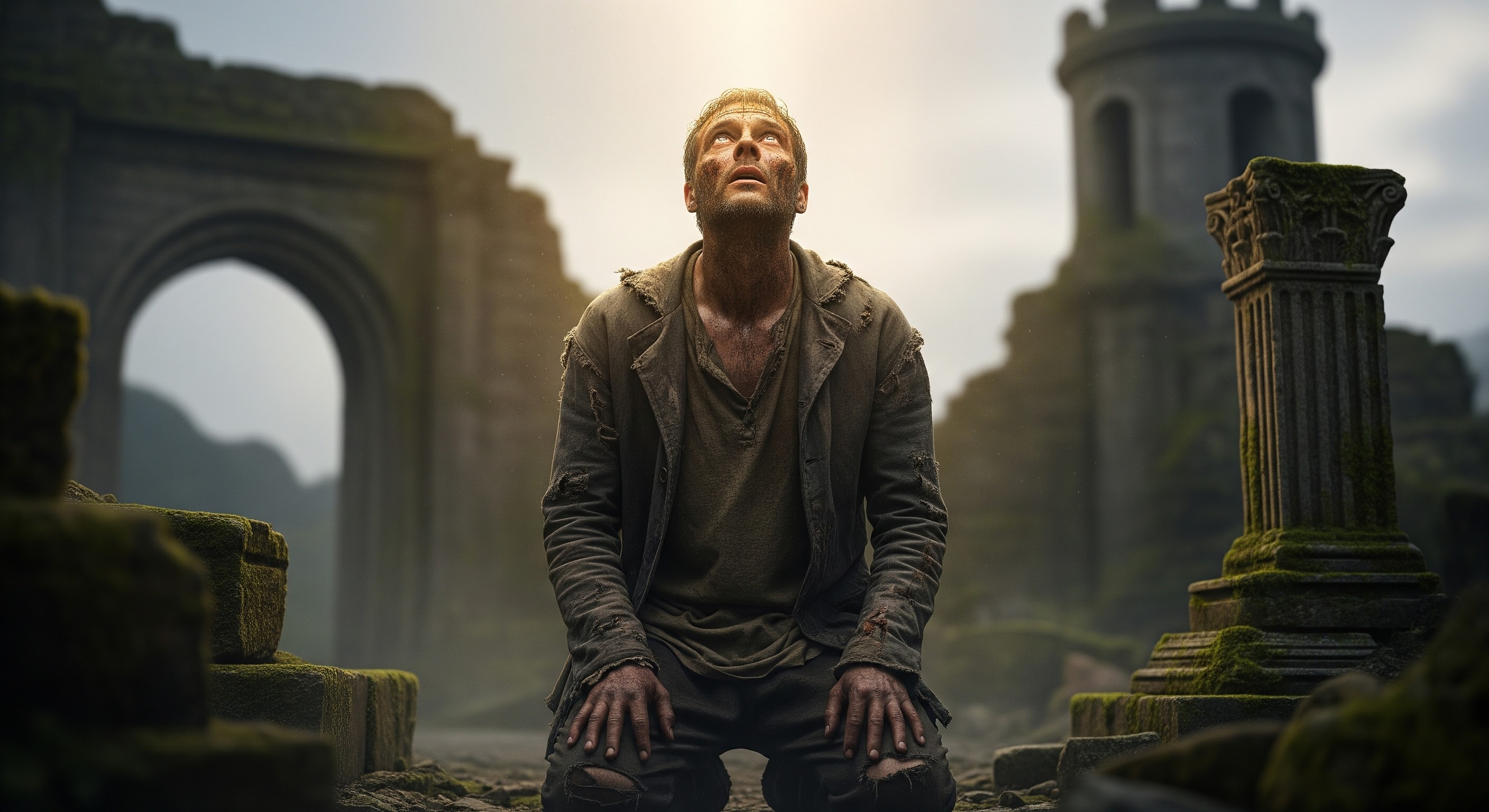
Place yourself back in the first century. If you had asked one hundred random people in Israel what they were most hoping for, you would have gotten numerous different answers. Some wanted a king to crush Rome. Some wanted priests to clean up the Temple. Some just wanted the world to burn. Everyone was waiting for the promised kingdom. Nobody could agree on what it looked like. Now after you finish your survey in the crowd of people, a man named Jesus of Nazareth walks into the picture, opens his mouth, captures everyone’s attention, and says: "Repent, for the kingdom of heaven is at hand." (Matthew 4:17)
But here is the problem: the Kingdom that Jesus was announcing was fundamentally different from the one everyone was waiting for. To understand why, you have to go back further than the Roman invasion. All the way back to a moment in 1 Samuel 8. The nation of Israel comes to Samuel with a request that sounds reasonable on the surface: give us a king like the other nations have. God's response to Samuel is striking. He says: they have not rejected you. They have rejected me from being king over them. The request for a human king was not just a political decision. It was a theological one. Israel was trading the direct reign of a just God for the reign of an unjust king simply for the status it would bring them among other nations.
God grants the request, but not without warning. Samuel reads them the fine print: the king will take your sons for his armies, your daughters for his household, your fields and your vineyards and your olive orchards. He will take a tenth of everything. And you will cry out because of your king (1 Samuel 8:11-18). This is the kingdom they were asking for.
The story of Israel's physical kingdom is largely the story of that warning coming true. Saul. David's failures. Solomon's excesses. The kingdom division. The northern tribes falling to Assyria. Judah falling to Babylon. The line of kings that they envisioned as better than God's reign ends in exile.
But all throughout that narrative we see prophets who continually told the people the story was not over. Isaiah 9:6-7 describes a child born to bear the government on his shoulders, whose kingdom would increase without end. Daniel, sitting in the court of the most powerful empire on earth, tells of a kingdom that will crush all others and stand forever (Daniel 2:44). The kingdom they had tried to build by asking for a king was always a shadow. The real thing was still coming.
“Blessed are the poor in spirit, for theirs is the kingdom of heaven. - Matthew 5:3.
This is where we find ourselves back in first century Israel. The declaration Jesus makes before he ever sits down to preach is that the real thing is here. The kingdom is not coming eventually. It is at hand. Present tense. And then he climbs the hill, sits in the posture of a rabbi about to teach, and the first words out of his mouth are blessed are the poor in spirit, for theirs is the kingdom of heaven. That is not an answer anyone would have given about what they were hoping for.
This isn't just a surprising first step; it's a completely un-kingly announcement.
The Greek word for poor here is ptochos. It does not mean modest or humble in a polite sense. It means destitute. Needy. The person who is totally dependent on others. The kingdom of heaven, Jesus says, belongs to that person. Not to the powerful. Not to the religiously accomplished. Not to the ones who had spent their lives positioning themselves for the moment the kingdom arrived
The people Israel had been in the recent centuries, the exiled, the overlooked, the ones ground down by one empire after another, were not disqualified from the kingdom. They were its first citizens.
We are still tempted to want the version Israel asked for in 1 Samuel 8. A kingdom we can see. Something that looks powerful from the outside, that operates by the same logic as the kingdoms around it, just with better values. Jesus spent three years pushing back against that instinct. He is still pushing back against it.
This is the challenge: We must confront what kind of kingdom Jesus actually announced, and what it means for us to trade our desire for the world's power for the unexpected, counter demands of his reign. The answer is going to keep surprising us, just as it surprised everyone who heard it first.
We have a tendency to look back on the people of the first century in judgment that they did not understand the message of Jesus but even today the temptation remains to want a visible kingdom modeled after worldly power structures. Jesus continues to challenge this. We must decide if we will trade the pursuit of power for the "poor in spirit" requirements of his rule. The character of this kingdom remains as surprising and challenging today as when it was first announced.
Loading comments…