
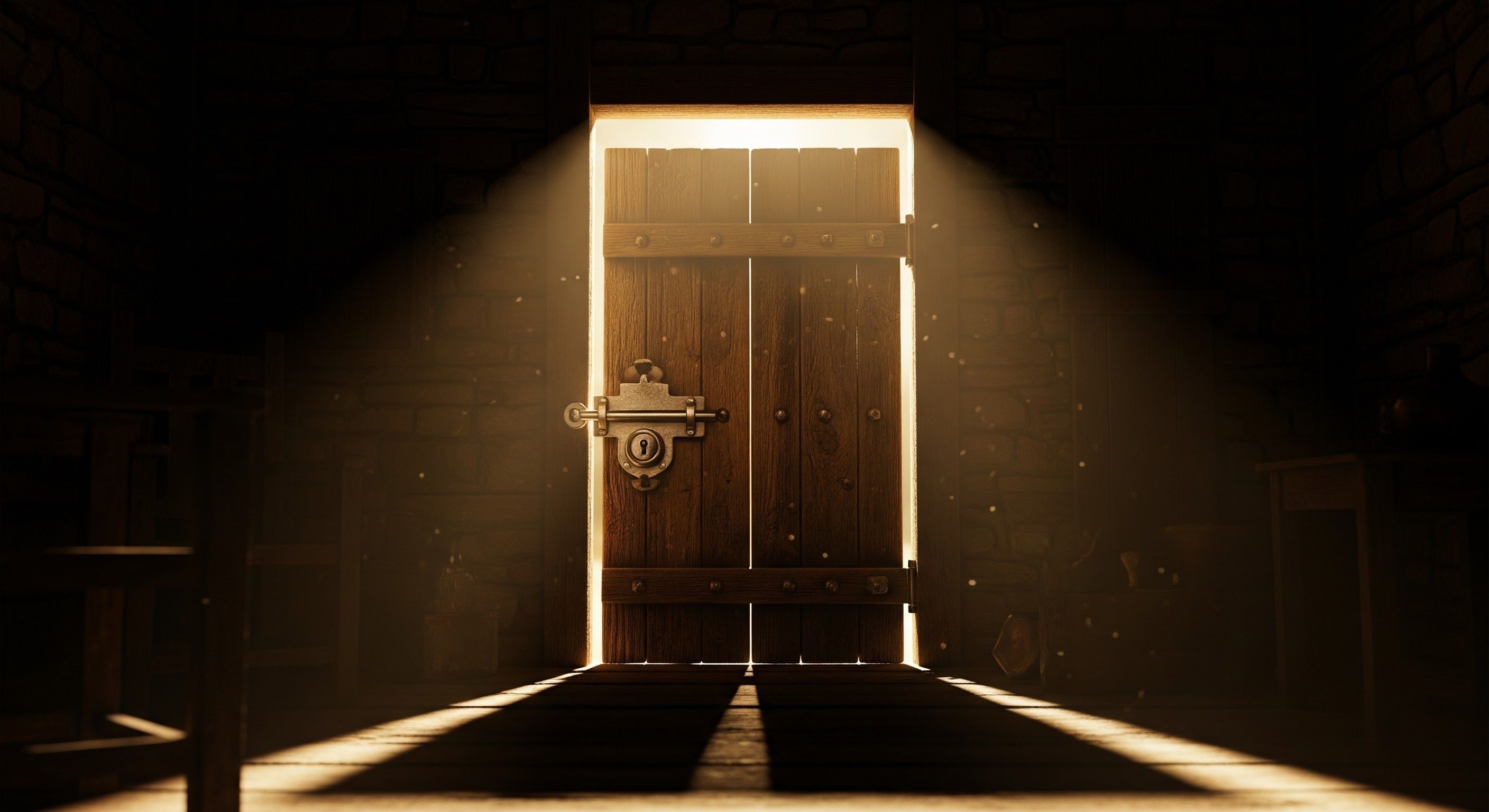
On the evening of that resurrection Sunday, the Gospel of John gives us a picture of the feelings among the disciples. They were not raucous with celebration, but instead we see hearts heavy, a group wrought with fear. (John 20:19-21) The doors were locked. The disciples were huddled together, hiding from a world they believed was out to get them. We see this example from the disciples and can infer the peak of human condition is signaled by those disciples: it is entirely possible to believe in the Resurrection and still be paralyzed by the world. The disciples knew the tomb was empty; they had heard the reports from the women and seen the linens for themselves. They were first hand witnesses. Yet, despite a tremendous miracle that had occurred only miles away and the countless miracles they saw with their own eyes, they remained behind locks. Faith is not the absence of fear; it is the presence of a Savior who is unimpressed by our locks. Our struggle is not that we don't believe; it is that we don't know how to let that belief penetrate the physical sensation of a racing heart or a knotted stomach. That we don’t know how to let our faith feed others because we are afraid of not being able to feed ourselves. We lock ourselves in inaction thinking that guarding ourselves will somehow stop the world from winning the spiritual and physical war it wages on us. We hide our anxieties in our homes and in our bedrooms, often putting on an external mask to prevent others from seeing us in our vulnerable moments. Instead of allowing us to sit in our fear, Jesus specializes in uninvited entries into our most guarded places. He enters through the walls of the disciples' anxiety, standing in the center of their panic, and speaks the only words that matter: "Peace be with you." The Risen Savior meets us in fear, not after we’ve conquered it but by giving us the commission that changes our focus from self-preservation to mission. There is a profound gap between knowing the truth and feeling the emotion; of having the truth be reflected in who you are. It is so easy to judge the disciples for their cowardice, yet we live in the same tension every week. We acknowledge the victory of Christ in our theology, but we inhabit the defeat of anxiety in our biology. Moving from this locked room to a state of peace requires identifying the specific barriers we’ve built. We must name the locked door that is currently keeping us from going out. Is it financial uncertainty, a strained relationship, or political turmoil? Once named, we MUST invite the one who walks through walls into that specific area of our lives. Furthermore, when a panic comes or stress spikes, we can use Jesus's greeting as a grounding prayer to recalibrate our bodies and spirits. "Peace, be with me." Repeat this practice until the physical symptoms of the "locked room" begin to subside. A locked door is no obstacle for the risen savior, but he enters to bring peace, not to scold us for being afraid. We can apply this peace through three easy ideas: practice the peace prayer daily in the moments your minds drift to the future. This week, write down one thought that makes you afraid. Tear that paper up, light it on fire, or throw it away as a physical manifestation of you giving that part of your life over to God. After you do that, share your current struggle with a follower of Christ to break the isolation of fear and leave together on a mission to take Jesus’s peace out into the world.
Faith & Life
Beyond Holy Week: The Resurrection Behind Lock and Key
Loading comments…