
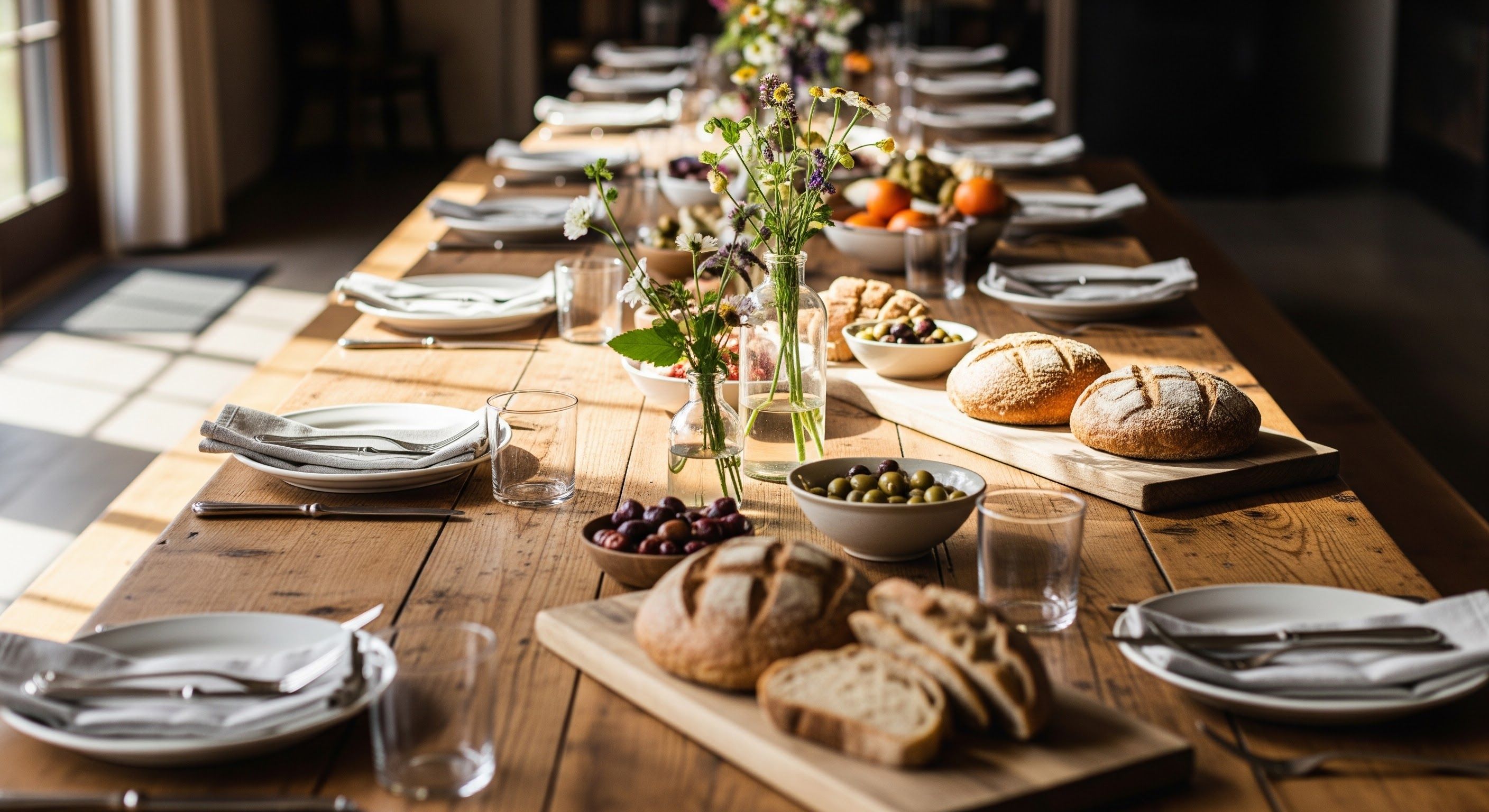
After a particularly moving experience, it often doesn’t take long until we find ourselves retreating back into the person/experiences we were before the experience. We retreat back into our comfortable silos, our personal bubbles, and our personal daily checklists. Easter Sunday doesn’t seem that different. We treat the Resurrection as a private insurance policy rather than what it truly was for the early church: a total social reorganization. If the tomb is empty, the rules of scarcity, the reign of evil, and the social walls of separation have been fundamentally dismantled by our Savior who was our example. As we near the end of this series exploring what it truly means to live "Beyond Holy Week" I urge you to truly move from the individual hope of "My God is enough for me" to the radical, collective realization of "There is enough for us". Much of this series we have spent exploring the inner thoughts; the anxieties, the fears, and the scars that keep us locked into our daily habits. They keep us from recognizing the hope we have that God is enough. They tie us to our bank accounts and our social media comparison metrics. Moving away from those is just the beginning and in fact God has given us a blueprint to escape them, and that blueprint involves a collective transformation. Our digital age conditions us for a scarcity mindset. We hoard our time, and our resources because we are terrified there won’t be enough. We compare our lives to the lives of the people we see all around us. But the God of the new resurrection age is the same God of manna (Exodus 16). In the wilderness, manna was a daily allowance, it couldn't be hoarded or stored without rotting. It was always there and was used to test the Israelities. Would they have a deep trust in the Provider and follow his law, or would they grumble, complain, and trust in their own ability to gather. Glorifying God means trusting that His abundance is greater than our perceived lack. It means realizing that manna was never meant for a storage jar; it was meant to be gathered daily and shared immediately with our tent. The prophet Isaiah reminds us to "forget the former things" because God is "doing a new thing" (Isaiah 43:18–19). Often, this "new thing" looks like a "wrong thing" to our old religious habits. In the immediate wake of the Resurrection, the first thing the apostolic community did was move to having all things in common through daily breaking of bread, distribution of wealth and having favor for all people (Acts 2:44–47). They didn't just worship together; they ate together and eliminated need. This is the heart of living beyond holy week: true community happens when we stop building higher fences and start building longer tables. The digital cathedral offers easy pain-free vulnerability through screens, but the open table requires the painstaking work of presence. It is at the open table where we move from the burden of comparison to taking up the cross of Christ, mimicking the ways he interacted with others. If you have more than you need in this world, whether it is time, wisdom, or wealth the Savior demands that you expand your circle and open the table to everyone. Perhaps the most difficult part of spiritual growth is the breakthrough from separating people into categories of clean, and unclean. We often use our faith to build a wall between us and a world we label profane, sinful, and evil. But in Acts 10, God shattered Peter’s use of these same categories. He took a man who had spent his life following closely to Jesus but was keeping his social circle “clean” and told him that nothing God has made clean should be called κοινόω (impure). This word is found frequently in the New Testament and the word would have meant to the religious leaders the idea of being “ritually impure”. Yet this same word is the one Jesus uses to explain to the Pharisees that what goes into your mouth is not what makes you impure but what comes out. Who we have in our home or around our table is not what makes us evil, but who we choose not to have. The sacrifice of Jesus tore through the veil in the temple, removing the barrier that once existed to separate us from God. Real personal growth isn't about keeping the old laws better; it's about a new law of Spirit that includes the people we previously despised or the ideas we labeled off-limits. If your faith hasn’t challenged your own personal prejudices lately, you might be worshipping a version of yourself, and not following in the footsteps of the person who walked out of the tomb. Use this week and this reflection to change that, invite someone to a meal who isn't in your inner circle. Move the relationship from a polite greeting to a shared table. Engage with one person or perspective you’ve labeled impure or wrong. Ask questions to see whether you can move towards having favor towards this person. As we approach the end of this series, we must move from contemplation to action. The Resurrection isn't a theory; it’s a lifestyle.
Faith & Life
Beyond Holy Week: The Scandal of the Open Table
Loading comments…