
This article grew out of a thought-provoking comment from Greg Chandler where he asked what I thought about the position of the word field in the big picture of the Bible. Thanks to Greg for the question that started this study.
For years, when looking at the beginning and end of the Bible, the picture that stands out the most is the picture of a garden. It opens the story as the place where man is placed (Genesis 2:8), and it ends the story as the paradise where the faithful are said to end up, where the one who overcomes is promised the right “to eat from the tree of life in the Paradise of God” (Revelation 2:7; see Revelation 22:2). At the end of Genesis 3, God drives Adam and Eve out of the garden and stations cherubim on its east side, “along with a whirling sword of flame to guard the way to the tree of life” (Genesis 3:24). Everything that happens in Scripture after that verse happens on the outside of it, in the land Adam and Eve were tossed out into. The Hebrew Bible has a name for that land, the field, and it is no coincidence that the word field carries from beginning to end just like the word garden. It tells a single story that starts at the gate of Eden and runs all the way to a hill outside the gate of Jerusalem, where the Son of God died (Hebrews 13:12), with a promise of a day when “all the trees of the field will clap their hands” (Isaiah 55:12).
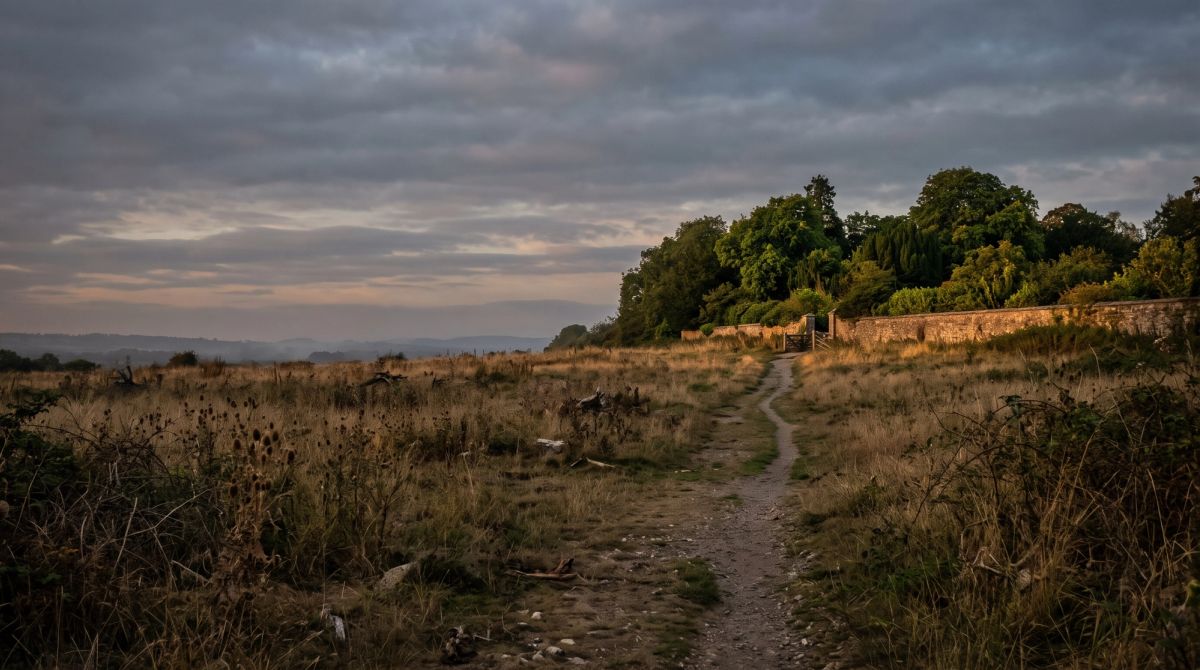
For most non-farmers, the word field doesn’t carry much weight. We take field trips, we watch games played on fields, and if somebody says we’re out in left field, they mean our idea is a little strange. The Hebrew word is sadeh (sah-DEH), and the meaning of the word is linked to the agrarian roots of the language. It covered all the open land outside a town’s walls, some of it planted in wheat and barley and some of it rough country that nobody had ever plowed. The Bible sets it alongside two other words for open land, the midbar, the wilderness, a frequent symbol of chaos in the scriptures, and the yaar, the forest or thicket (Rom-Shiloni 2024). Of the three, the field sat closest to home. People walked out to it every morning to work and left for the safety of home before dark. The word field should make the reader picture a place that is busy in the daytime and empty at night, and somewhere far enough from town that nobody would hear you if something went wrong out there. Even the phrase “beasts of the field,” which comes up all over the Old Testament, means the wild animals that lived out past the walls rather than cows grazing behind a fence.
The word first appears in Genesis 2, before anything has grown, even before the word garden. “Now no shrub of the field had yet appeared on the earth, nor had any plant of the field sprouted, for the LORD God had not yet sent rain upon the earth, and there was no man to cultivate the ground” (Genesis 2:5). When God forms the man, he doesn’t leave him out in that bare ground. “The LORD God planted a garden in Eden, in the east, where He placed the man He had formed” (Genesis 2:8). The garden is the place God planted with his own hands and the place where he walks with the people he made, while the field is everything beyond it, still waiting for rain. The garden is the enclosed place, elevated for viewing, pleasure, and relaxation. From its first appearance, then, the field is described by its separation from the place God intended for his people.
The trouble in Genesis 3 that leads to this separation comes from the field. “Now the serpent was more crafty than any beast of the field that the LORD God had made” (Genesis 3:1). The first voice in Scripture to question God belongs to a wild creature from outside the garden, and the man and woman listen to it. When God pronounces judgment, the serpent is “cursed above all livestock and every beast of the field” (Genesis 3:14), and the man is told, “Both thorns and thistles it will yield for you, and you will eat the plants of the field” (Genesis 3:18). Adam had been placed in a garden to tend it, and now he would live in the field and pull his food out of thorny ground among the wild animals. Scripture never treats that ground as background scenery, since the soil itself bears the curse of what humans have done (Davis 2009), and the rest of the Old Testament is lived out on it.
The first thing that happens in the field after Eden is a murder. Cain was “a tiller of the soil,” and one day he spoke to his brother, “and while they were in the field, Cain rose up against his brother Abel and killed him” (Genesis 4:2, 8). The text doesn’t explain why Cain chose the field, but anyone in that world would have understood, because out there no one would see it happen and no one would come running. When God asks where Abel is, Cain answers with a lie and a shrug, as if the field had kept his secret for him. God tells him otherwise: “The voice of your brother’s blood cries out to Me from the ground” (Genesis 4:10). God is telling Cain that even though the field seems empty, he witnesses everything.
God’s law later demonstrates this posture again. If an engaged young woman was assaulted inside a town, the law assumed someone would have heard her scream, but if it happened in the field she was to be believed, because “the betrothed woman cried out, but there was no one to save her” (Deuteronomy 22:27). The law also refuses to let what happens out there disappear. Suppose a farmer walks out one morning and finds a man lying dead in a field between two villages, and nobody knows who killed him. “Your elders and judges must come out and measure the distance from the victim to the neighboring cities” (Deuteronomy 21:2). We can picture the elders of two or three small towns pacing off the distance with their measuring cords, and it’s hard not to suspect that a few of them were hoping the body sat a little closer to the next town over. The elders of whichever town was nearest then broke the neck of a young cow beside a stream that had never been farmed, washed their hands over it, and said, “Our hands did not shed this blood, nor did our eyes see it,” followed by a prayer: “Accept this atonement, O LORD, for Your people Israel whom You have redeemed” (Deuteronomy 21:7-8). Hittite law held the nearest settlement responsible in a similar way (Feder, TheTorah.com), and the ritual gave a village a way to face the fear and guilt that an unsolved killing leaves behind (Niditch 2017). Behind both laws is what God told Cain, that blood spilled in the field still reaches him, and even though the field represents the separation from God, he still rules over it.
For centuries after the law was written, the field stood for life outside the garden, and in Ezekiel 16 God uses the image of himself going out into it. He tells Jerusalem the story of her birth, and it is the story of a child nobody wanted. “On the day of your birth your cord was not cut, nor were you washed with water for cleansing. You were not rubbed with salt or wrapped in cloths” (Ezekiel 16:4). “No one cared enough for you to do even one of these things out of compassion for you. Instead, you were thrown out into the open field, because you were despised on the day of your birth” (Ezekiel 16:5). She was left where no one hears a cry and where the wild animals come at night, which is the field as it had been since Abel. Legal documents from ancient Mesopotamia used this same kind of language for abandoning a child, and they used the language of picking a child up for adoption (Malul 1990), which matters for how we hear the next verse. “Then I passed by and saw you wallowing in your blood, and as you lay there in your blood I said to you, ‘Live!’ There I said to you, ‘Live!’” (Ezekiel 16:6). In Genesis, blood cried out from the field and God heard it from wherever he was, while in Ezekiel he walks out to the field himself, finds a baby lying in her own blood, and claims her as his child.
God continues the imagery, and the field she was left in becomes the place where she grows. “I made you thrive like a plant of the field,” God says (Ezekiel 16:7). Two scholars connect this scene to the Song of Moses, where God found Israel “in a desert land, in a barren, howling wilderness” and “guarded him as the apple of His eye” (Deuteronomy 32:10; Gile 2011; Koller 2017), so Ezekiel seems to be retelling the exodus with a newborn at the center of it. When the girl is grown, God makes a covenant with her, and “you became Mine” (Ezekiel 16:8). He dresses her in fine linen, silk and embroidered cloth, and “you became very beautiful and rose to be queen” (Ezekiel 16:13). The clothing in those verses echoes the language used for the tabernacle and its priests (Quick 2023), which means the girl from the field ends up dressed for the house of God. Genesis 3 sent humanity out of God’s garden into the field, and here God carries one abandoned child from the field back toward the place where he lives.
The danger in Ezekiel’s story is that she forgets where she came from. The queen comes to trust her beauty and gives herself to other gods, and God’s charge against her is that “you did not remember the days of your youth when you were naked and bare, wallowing in your own blood” (Ezekiel 16:22). The greatest king of Ezekiel’s own day made the same mistake. Nebuchadnezzar stood on his palace roof and said, “Is this not Babylon the Great, which I myself have built as a royal residence by the might of my power and for the glory of my majesty?” (Daniel 4:30). God sent him out to the field, telling him, “You will be driven away from mankind to live with the beasts of the field,” and that it would last “until you acknowledge that the Most High rules over the kingdom of mankind” (Daniel 4:32). In both stories, people God raised up out of the field forgot him and ended up back in it. Ezekiel 16 spends most of its length on that judgment, and it is hard reading. When God finally promises to restore Jerusalem, he says she will “remember and be ashamed and never again open your mouth because of your disgrace,” and that this will happen “when I make atonement for all you have done” (Ezekiel 16:63). Her restoration comes with a memory attached, and God intends for her to keep it.
Long before Ezekiel, God had already written mercy into the field. “When you reap the harvest of your land, you are not to reap to the very edges of your field or gather the gleanings of your harvest,” the law says, because the leftovers were for “the poor and the foreigner” (Leviticus 19:9-10). That law is how a young widow from Moab, an outsider in every way that mattered to Israel, could follow the harvesters and pick up what they left behind. The book of Ruth describes it: “she happened to come to the part of the field belonging to Boaz, who was from the clan of Elimelech” (Ruth 2:3). Nothing in that book happens by accident, and the field God had told farmers to leave ragged at the edges is where a foreigner was brought into the family that would produce King David.
God also tied his promises about the future to fields. One of the first pieces of the promised land that Abraham ever owned was a field he bought as a grave for Sarah, and he bought it while describing himself this way: “I am a foreigner and an outsider among you. Give me a burial site among you so that I can bury my dead” (Genesis 23:4). Centuries later, with the Babylonian army camped outside Jerusalem and the land about to be lost, God told Jeremiah to buy his cousin’s field at Anathoth and seal the deed in a clay jar, because “houses, fields, and vineyards will again be bought in this land” (Jeremiah 32:15). Buying real estate in the middle of a siege must have looked foolish to everyone watching, but the purchase was a public sign that ordinary life would return to the land after the exile (Terblanche 2020). The Old Testament closes with that promise still waiting, that the field would one day be bought back and made new.
When Jewish scholars translated the Hebrew Bible into Greek, a few centuries before Jesus, they usually rendered sadeh with the Greek word agros, the root of our word agriculture. The New Testament uses the same word, so the field of the Gospels is the same field Cain, Ruth and Ezekiel’s baby knew. When the King is finally born, the announcement goes there first: “And there were shepherds residing in the fields nearby, keeping watch over their flocks by night” (Luke 2:8). The angels went past the temple and past Herod’s palace, out beyond the walls at night, to men in the kind of place where nobody came when people called for help.
Jesus told a story that puts both of a father’s sons in the field. The younger son takes his inheritance, wastes it, and ends up hired by a foreigner “who sent him into his fields to feed the pigs” (Luke 15:15), which for a Jewish listener is about as far from home as a person could fall. When he comes to his senses and starts back, “while he was still in the distance, his father saw him and was filled with compassion. He ran to his son, embraced him, and kissed him” (Luke 15:20). Meanwhile “the older son was in the field,” working, and when he hears the music he is furious. “The older son became angry and refused to go in. So his father came out and pleaded with him” (Luke 15:25, 28). The younger son ran away to a field, and the older son had been working in one the whole time, and the father in Jesus’ story goes out to both of them the way God went out to the baby in Ezekiel 16.
Jesus also told his disciples what the field is. In the parable of the wheat and the weeds, an enemy sneaks into a man’s field at night and sows weeds among the wheat, and when the disciples ask what it means, Jesus says, “The field is the world, and the good seed represents the sons of the kingdom. The weeds are the sons of the evil one” (Matthew 13:38). The land outside Eden has grown to include the whole world, and that parable ends with a harvest where the weeds are gathered and burned, so we can’t treat the field in Jesus’ teaching as a gentle picture. A few verses later he says, “The kingdom of heaven is like treasure hidden in a field. When a man found it, he hid it again, and in his joy he went and sold all he had and bought that field” (Matthew 13:44). Christians have read the man in that parable two ways since the early church, as a disciple who gives up everything for the kingdom or as Christ, who gives everything to buy the field he has just called the world (Jorgensen 2016). Either reading carries forward what God promised through Abraham and Jeremiah, that the field would be bought, and it adds that the buyer pays everything he has.
In the Gospels, the price was Jesus’ life. After Judas betrayed him for thirty pieces of silver, he threw the money back at the priests, and since they couldn’t put blood money into the temple treasury, “they used the money to buy the potter’s field as a burial place for foreigners. That is why it has been called the Field of Blood to this day” (Matthew 27:7-8). Matthew presents this as the fulfillment of the prophets, drawing on Jeremiah’s potter’s jar smashed in a valley outside Jerusalem, on Jeremiah’s field purchase, and on the thirty pieces of silver Zechariah threw to the potter (Jeremiah 19; Jeremiah 32; Zechariah 11:12-13; Moo 1983). Abraham, a foreigner himself, bought the first field in the promised land to bury his dead, and the money paid for Jesus’ life bought a field where foreigners could be buried. The name of that field also reaches back to Genesis 4, where Abel’s blood cried out from a field. Hebrews makes that connection directly when it says believers have come “to Jesus the mediator of a new covenant, and to the sprinkled blood that speaks a better word than the blood of Abel” (Hebrews 12:24). Abel’s blood called for justice against his brother, and Hebrews says Jesus’ blood says something better, because it is the blood of the new covenant that brings people near to God.
We still live in the field, and it still cries out. James warns wealthy landowners who had cheated the men who worked their land, “Look, the wages you withheld from the workmen who mowed your fields are crying out against you. The cries of the harvesters have reached the ears of the Lord of Hosts” (James 5:4). The harvest Jesus described hasn’t come yet either. The prophets, though, had already described where the story ends. When God brings his people home, Isaiah says, “the mountains and hills will burst into song before you, and all the trees of the field will clap their hands. Instead of the thornbush, the cypress will grow, and instead of the brier, the myrtle will spring up” (Isaiah 55:12-13). The ground that grew thorns and thistles in Genesis 3 is pictured growing cypress and myrtle, with its trees applauding as God’s people walk home through it.
All of that hope, from the field bought back to the thorns replaced by cypress, rests on one afternoon outside the walls of Jerusalem, and that afternoon is where the story of the field comes to its end. To see why, it helps to go back to Bethlehem. When Jesus was born, Mary “wrapped Him in swaddling cloths and laid Him in a manger” (Luke 2:7). Ezekiel’s baby was never “wrapped in cloths” (Ezekiel 16:4), because no one cared enough to do it. The child in Bethlehem was wanted from his first night, wrapped by his mother and announced by angels to shepherds out in the fields. About thirty years later, that wanted child was led out of the city to die.
“Carrying His own cross, He went out to The Place of the Skull, which in Hebrew is called Golgotha” (John 19:17). Along the way the soldiers grabbed a man named Simon of Cyrene, who “was passing by on his way in from the country,” and made him carry the cross (Mark 15:21). The word Mark uses for the country is agros, the same word the Greek Bible used for the field, so a man walking in from the field took up the cross while Jesus walked toward the place where he would die. None of the Gospels calls Golgotha a field. It was a place by the road outside the city walls, where Rome put its executions on display for everyone going in and out. Even so, in the language of the Old Testament everything past the walls belonged to the field, the open land where Abel was killed, where the elders measured the distance to a body, and where Ezekiel’s baby was thrown. Hebrews puts it plainly: “Jesus also suffered outside the city gate, to sanctify the people by His own blood” (Hebrews 13:12).
Hebrews explains why the place matters by reaching back to the law. On the Day of Atonement, the high priest carried the blood of the sin offering into the Most Holy Place, and then the bodies of the bull and the goat were carried outside the camp and burned there (Leviticus 16:27). Hebrews ties that ritual to the cross: “Although the high priest brings the blood of animals into the Holy Place as a sacrifice for sin, the bodies are burned outside the camp” (Hebrews 13:11). The very next verse is the one about Jesus suffering outside the gate. The law had already taught Israel that atonement could be made out past the edge of where people lived. In Deuteronomy 21 the elders walked out to a body in the field and prayed, “Accept this atonement, O LORD, for Your people Israel whom You have redeemed” (Deuteronomy 21:8). In Ezekiel 16 God promised Jerusalem a day “when I make atonement for all you have done” (Ezekiel 16:63). Hebrews teaches that this atonement was made once and for all outside the walls of Jerusalem, and the one who died there to make it was the Son of God himself.
At the cross, the soldiers “divided up His garments by casting lots” (Matthew 27:35), so the baby whose mother had wrapped him now hung stripped outside the city, left to die like something thrown away. Matthew adds that “those who passed by heaped abuse on Him, shaking their heads” (Matthew 27:39). Ezekiel had described God the same way, as the one who passed by the dying child (Ezekiel 16:6, 8). In Ezekiel, God passed by a baby in the field and stopped to say, “Live!” At Golgotha, the crowd passed by the dying King and kept walking. The wanted child took the place of the unwanted one, and he was carried out to the field so that people who had been thrown out into it could be carried home.
The cross also answers the field where the story’s first death happened. Abel was killed out in the field where Cain thought no one would see, and his blood cried out from the ground (Genesis 4:10). Jesus was killed beside a road where everyone could see, and the people watching still didn’t understand what they were looking at. His blood was spilled on the ground outside the city too, and Hebrews says it is the blood that “speaks a better word than the blood of Abel” (Hebrews 12:24). The first blood in the field called for justice against a brother. This blood was shed to bring the people who had been driven out of the garden near to God again.
After he died, Joseph of Arimathea took the body down and “wrapped it in a linen cloth” (Luke 23:53). Jesus was wrapped at his birth because he was wanted, and he was wrapped at his burial because he had been thrown away in our place. John adds a detail: “Now there was a garden in the place where Jesus was crucified, and in the garden a new tomb in which no one had yet been laid” (John 19:41). The story of the field began with God planting a garden and sending humanity out of it into the field. It ends with the Son of God going out of the city into that open land to die, and with his body laid to rest in a garden.
Hebrews draws its application straight from the cross: “Therefore let us go to Him outside the camp, bearing the disgrace He bore” (Hebrews 13:13). Until the day the trees of the field clap their hands, the field is where we live, and Deuteronomy 21 gives us a practical place to begin. When a body was found in the field, God didn’t let any town say it wasn’t their business, so the elders had to measure the distance, walk out, and answer for it. Most of us live near someone who is out in the field right now, someone whose trouble is happening past the walls where nobody sees it. That might be a coworker whose marriage is coming apart while the office assumes everything is fine, or the widow who sits in the same seat every week and goes home to a silent house after the last song.
Remember you were once lying in the open field when God passed by, that Jesus went out to the field to die in your place, and that the first word God spoke over you there was “Live!” (Ezekiel 16:6).
Sources
Davis, Ellen F. Scripture, Culture, and Agriculture: An Agrarian Reading of the Bible. Cambridge University Press, 2009.
Feder, Yitzhaq. “Breaking the Heifer’s Neck: A Bloodless Ritual for an Unsolved Murder.” TheTorah.com.
Gile, Jason. “Ezekiel 16 and the Song of Moses: A Prophetic Transformation?” Journal of Biblical Literature 130 (2011).
Jorgensen, David W. Treasure Hidden in a Field: Early Christian Reception of the Gospel of Matthew. De Gruyter, 2016.
Koller, Aaron. “Pornography or Theology? The Legal Background, Psychological Realism, and Theological Import of Ezekiel 16.” Catholic Biblical Quarterly 79, no. 3 (2017): 402-421.
Malul, Meir. “Adoption of Foundlings in the Bible and Mesopotamian Documents: A Study of Some Legal Metaphors in Ezekiel 16.1-7.” Journal for the Study of the Old Testament 46 (1990).
Moo, Douglas J. “Tradition and Old Testament in Matt 27:3-10.” In Gospel Perspectives 3 (1983).
Niditch, Susan. “Beautiful Theories: Approaching Deut 21:1-9 as Ritual Performance.” Brill, 2017.
Quick, Laura. “Gowns, Crowns, and the Marriage Metaphor: Divinization and Divine Dethronement in Ezekiel 16.” Svensk Exegetisk Årsbok 88 (2023): 195-219.
Rom-Shiloni, Dalit. “Spatial Language of the Wild: Yaʿar, Midbar, and Śādeh.” In Crossing Borders Between the Domestic and the Wild, 2024.
Terblanche, Marius. “‘The Future in the Land belongs to us’: Conflicting Perceptions on the Land in Jeremiah 32:1-44.” Old Testament Essays 33, no. 1 (2020).
Loading comments…