
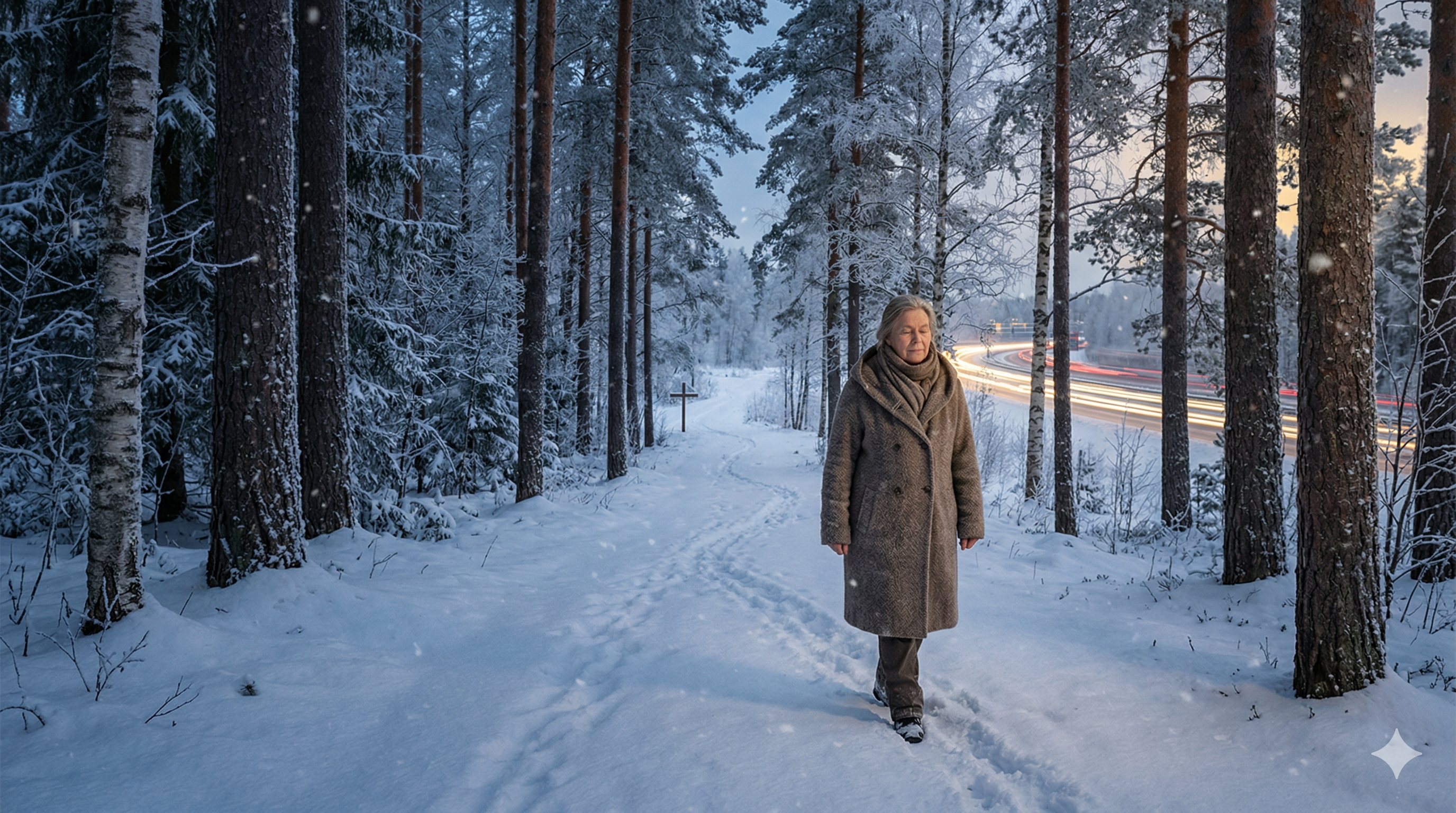
At the start of January, my mind is usually busy cataloging all the ways that western culture pressures me into optimizing life. Much like I have been guilty of “reading backwards” in Scripture by imposing the New Testament onto the Old, I realize I often read my year backwards. I view January through the lens of modern industrialism rather than biblical agriculturalism. January preaches a message of acceleration: add a habit, join a gym, read more books, produce more fruit. We are told that the solution to the vague dissatisfaction we feel as the year turns is addition.
We have established our own form of holy days and temples. If the shopping mall is the temple of consumerism, then January is the “Month of Atonement.” We spend December indulging in the “sins” of gluttony and sloth. When the clock strikes midnight on the first, we enter a period of ritualistic penance. The gym becomes the new temple, and the planner becomes the sacred text. We engage in rituals of self-denial and strict discipline, hoping to purify ourselves from the previous year.
The cultural message is clear. We must accelerate, produce, and prove our worth through an increase in output. But if we are truly trying to “seek first the Kingdom,” we must recognize that the Kingdom operates on a jarringly different rhythm. Looking outside in January, creation is telling us about that rhythm. The sky is gray. The trees are bare. The ground is hard. The days are short. Nature is not accelerating; it is resting. To the untrained eye, a dormant tree looks dead, but it is actually engaged in a critical act of survival. It has withdrawn energy from its branches to deepen its roots. If a tree tried to bloom in January, the frost would kill the fruit, and the effort would exhaust its reserves.
Consider the creation narrative. Man is made from dust of the ground (adama). There is an intrinsic link between the human and the soil. This connection is why Leviticus 25 is so arresting when you encounter it in a continuous reading of the Torah. After much instruction on how the people must act, God suddenly commands a Sabbath for the dirt.
“Six years you shall sow your field... but in the seventh year there shall be a Sabbath of solemn rest for the land, a Sabbath to the Lord.” (Leviticus 25:3-4).
We often view our bodies and souls as machines separate from the created order. We think we can run on a conveyor belt of constant summer harvest. But God did not design us as machines; He designed us as gardens. And gardens require winter. It seems counterintuitive. In an agricultural society, leaving a field fallow for a year looks like negligence. It looks like a waste of potential assets. Yet God codifies this dormancy into the law. He insists that the ground, and by extension the adam formed from it, cannot sustain a perpetual harvest.
This is the context Jesus steps into in Matthew 6. When He tells us to “seek first the kingdom,” He is contrasting it with the way the nations seek security through anxious toil. The danger of our modern January rituals is that they are often rooted in the worship of the self. We modify our behavior to achieve a desired identity, much like the shopping mall “temples” offer us products to achieve a “blessed life.” We resolve to do more, thinking that production equals godliness.
But look at the life of Jesus. If we are to imitate Him, we see a man who understood the seasons of the soul. Jesus spent thirty years in relative obscurity (a long season of dormancy) before three years of ministry. Even during His active work, He frequently withdrew to “desolate places” to pray (Luke 5:16). He did not fear the silence. He did not rush the harvest. What if the most faithful thing you could do this January is not to start something new, but to stop?
Just as the trees outside are currently engaging in hidden work of root-deepening rather than fruit-bearing, the “winter of the soul” is a necessary season. It is not “dead time” to be rushed through. It is the time when the nutrients of grace are replenished. If a farmer forced his field to produce a harvest in the seventh year, the soil would be depleted, and the future crops would fail. By demanding that we be in a constant state of “springtime” where we are always growing and blooming, we are depleting the very soil of our lives.
Perhaps our resolutions this year should look less like a corporate improvement plan and more like Leviticus 25.
What if, instead of adding more noise to your life this month, you allowed for a sacred dormancy? This doesn't mean laziness. It means recognizing that we are subjects of a different King. So, let the world have its frantic January. Let the gym parking lots be full and the planners be packed. As for us, let us not be afraid of the fallow ground. Let us trust that the God who commands the land to rest is the same God who is tending to our souls in the quiet. Spring is coming. The resurrection ensures it. But we cannot rush the season. For now, be still.
Loading comments…