
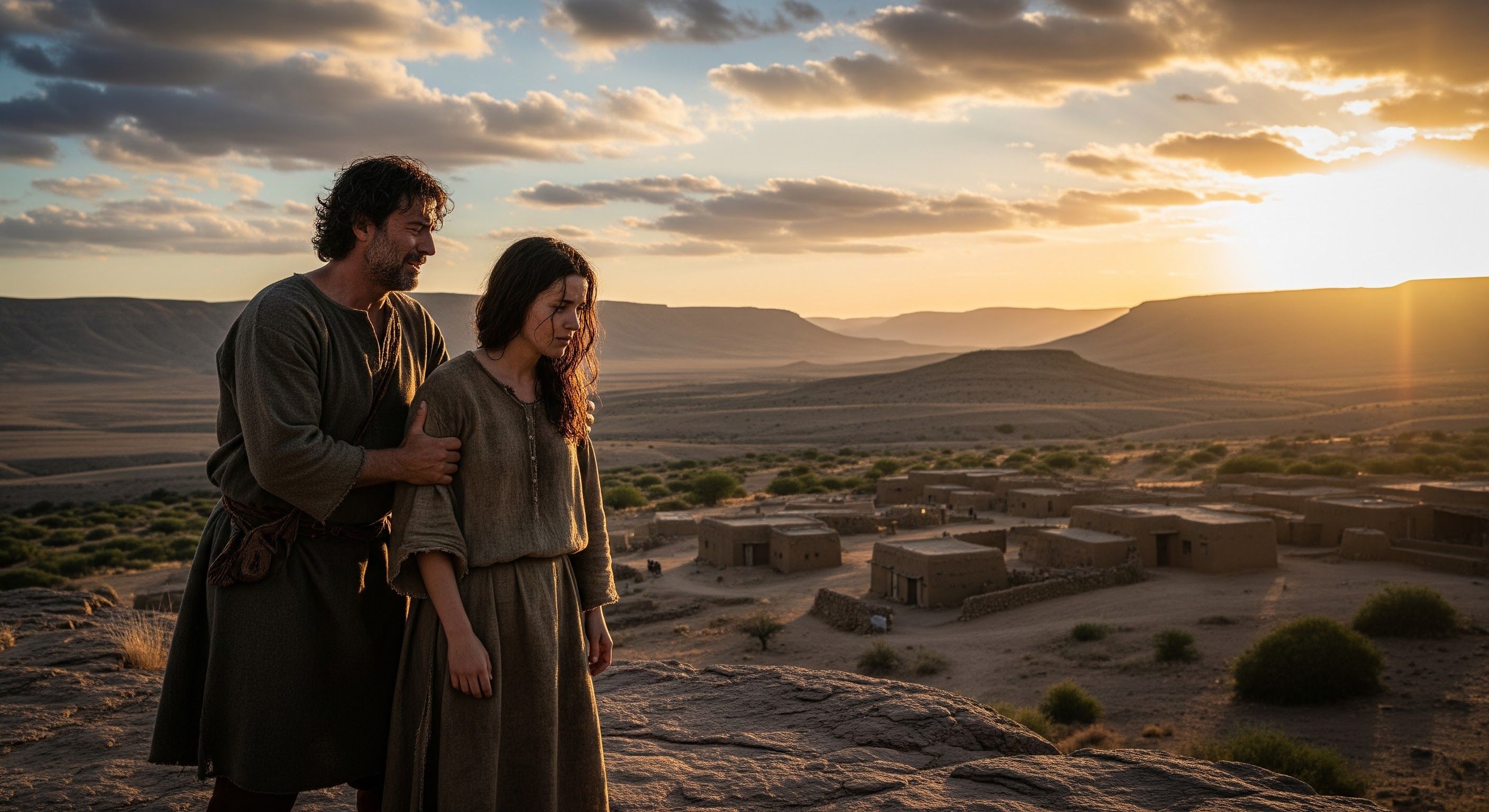
There is a stretch of the Old Testament that most of us treat like fine print. You know it is there. You intend to read it eventually. It sits between Daniel and Matthew like a hallway with the lights off, twelve short books that never quite make it onto the sermon series rotation or the daily reading plan we actually finish. Hosea opens that hallway. And the first thing God says to him is strange enough to make you stop.
Go marry a woman who will be unfaithful to you. That is the command. Not a woman who has a complicated past, not a woman who might stray. A woman who will. Hosea 1:2 does not cushion it: "Go, take to yourself a wife of whoredom and have children of whoredom, for the land commits great whoredom by forsaking the Lord." Hosea obeys. He marries a woman named Gomer. Before a single oracle is delivered, before a single word of warning goes out to Israel, the prophet's own marriage is already the message.
God does not open this book with a vision or a list of Israel's crimes. He opens it by asking a man to love someone who will not love him back, and to keep doing it anyway. Whatever Hosea is about to say to Israel, he will say it as a man who has lived it. The sermon is not a speech. It is a life.
Gomer leaves. The text does not dwell on the particulars, but by chapter 3, Hosea is buying her back from what appears to be slavery. Fifteen shekels of silver and some barley. He brings her home and tells her to wait.
Two verses, and the whole weight of the book is already sitting in them. The book of Hosea is not primarily about Hosea and Gomer. That is the point. Israel had done what Gomer did. They had taken everything God gave them, the land, the harvests, the protection, the covenant relationship, and credited it somewhere else. Hosea 2:8 says it plainly: "She did not know that it was I who gave her the grain, the wine, and the oil, and who lavished on her silver and gold, which they used for Baal." They took the gifts and gave the gratitude to other gods. They left.
So God, by putting Hosea through this, is not illustrating a theological point from a safe distance. He is showing us what it feels like from his side. That is where the book gets genuinely hard to read.
The judgment passages in Hosea are real and they are detailed. Chapters 4 through 10 cycle through accusation and warning with a specificity that makes clear this is not rhetorical. God is describing what he actually sees. No faithfulness, no steadfast love, no knowledge of God in the land. Swearing, lying, murder, stealing, adultery. The land itself mourns under the weight of it.
What sets Hosea apart from almost anything else in Scripture is that the judgment and the grief cannot be separated. This is not a distant king issuing a verdict. The voice throughout these chapters is the voice of someone who has been left. Hosea 2:2 sounds like a man standing outside a closed door: "She is not my wife, and I am not her husband." And yet twelve verses later the tone shifts entirely: "Therefore, behold, I will allure her, and bring her into the wilderness, and speak tenderly to her." The courtroom becomes a quiet field. The indictment becomes a whisper.
That movement happens more than once in Hosea, and it never fully resolves. It is not a progression from angry to calm. It is more like both things are true at once, held up together without apology.
Chapter 11 is the clearest example. God shifts metaphors entirely here, from husband to parent. "When Israel was a child, I loved him, and out of Egypt I called my son" (Hosea 11:1). Then the indictment again. Then verse 8, which stops the whole book cold.
"How can I give you up, O Ephraim? How can I hand you over, O Israel? My heart recoils within me; my compassion grows warm and tender." God is talking himself through it. Not decreeing. Not pronouncing a verdict from the bench. Wrestling with what justice requires and what love refuses to do.
The restoration Hosea promises is not cheap or quick. Real consequences come first. Israel will be scattered. The political alliances they trusted will fail. The false worship will be exposed for what it is. Hosea does not skip any of that. But the restoration is also never in doubt. Hosea 14 closes the book with what reads almost like a script God is handing Israel, the words they need to come back, followed by God answering the prayer before they have even prayed it. "I will heal their apostasy; I will love them freely, for my anger has turned from them" (Hosea 14:4).
Freely.
The marriage metaphor earns its place in the book because marriage is one of the only human experiences where betrayal and love and the decision to stay can all occupy the same space at the same time. Hosea lived there. He bought his wife back with fifteen shekels of silver and brought her home. According to the book, God did something not entirely different for Israel. the New Testament would say he did something not entirely different for us.
That is a harder portrait of God than the one most of us carry around. Not a God who is mildly disappointed and willing to overlook things. Not a vending machine of grace. A God who has been genuinely wronged, who sees it clearly, who names it without flinching, and who also cannot bring himself to let go.
Hosea does not resolve that tension. It just holds it up to the light and lets you look at it.
Loading comments…