
Obadiah, for many a popular name, for others a book that's difficult to find when turning the pages of their paper Bible. It is the shortest book in the Old Testament, twenty-one verses tucked into the minor prophets between Amos and Jonah, easy to skip and easier to forget. But those twenty-one verses are doing something that takes the whole Bible to fully understand, because Obadiah is not just a word against one ancient nation. It is the latest chapter in a story that started in the very first family.
The book is a judgment oracle against Edom. That name will not mean much to most modern readers, so it helps to know where Edom came from. Edom is the nation descended from Esau, the brother of Jacob. And the relationship between Esau and Jacob goes back further than either of them, all the way to the womb. Genesis 25 tells us the twins struggled against each other before they were born, and that struggle became the defining feature of their lives and of every generation that followed them. Jacob took the birthright. Jacob took the blessing. Esau wept and never forgot it.
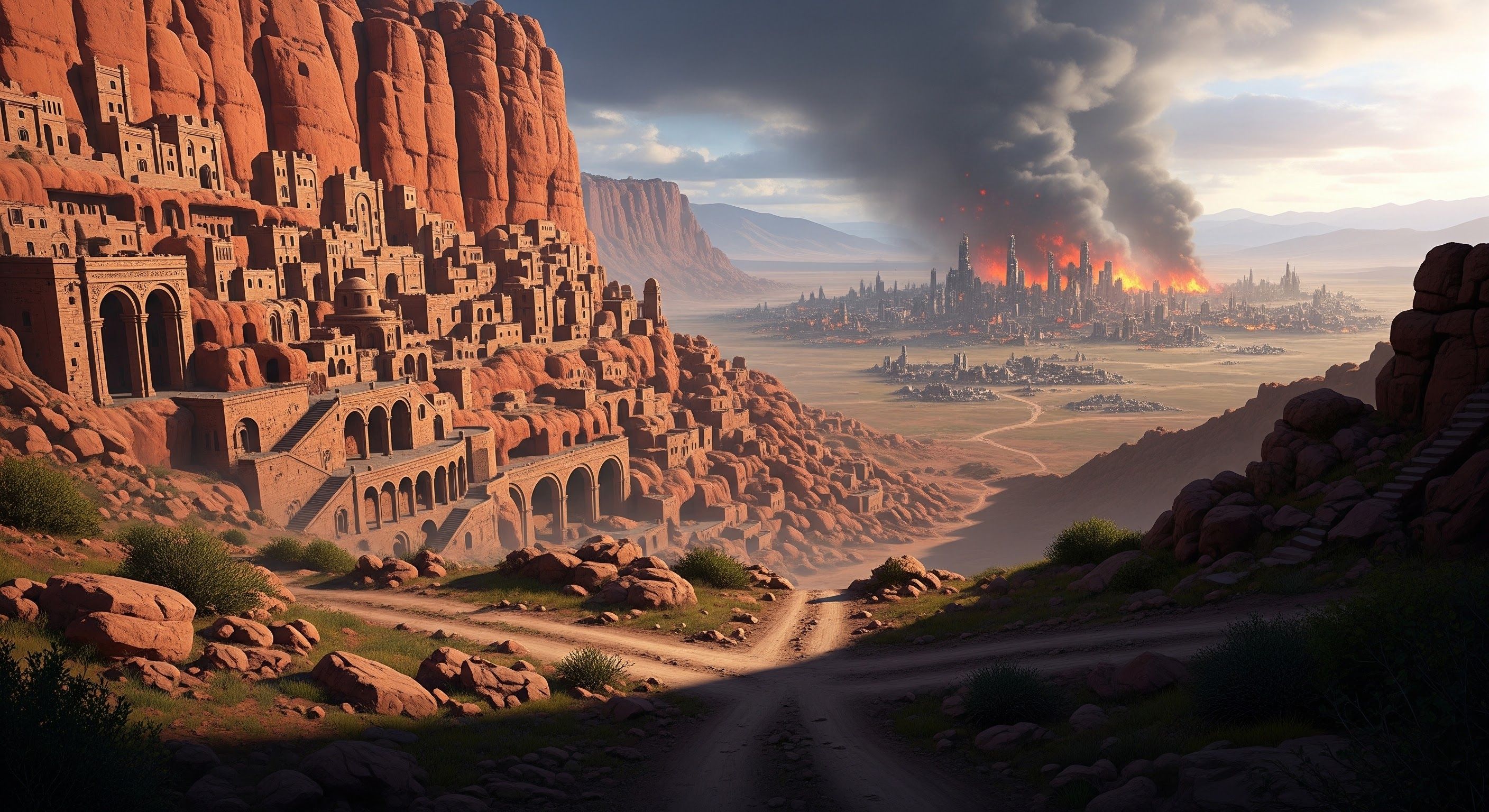
By the time Obadiah writes, that ancient wound has become national policy. The historical moment behind Obadiah seems to be the fall of Jerusalem to Babylon. The city is taken. The temple is destroyed. The people are carried into exile. In that moment, when Israel is at its lowest, Edom does something Obadiah classifies as unforgivable. They do not help. They stand at the crossroads as Israelites try to flee and cut them off. They loot the city alongside the conquerors. They gloat.
Verse 10 carries a heavy condemnation: "Because of the violence done to your brother Jacob, shame shall cover you, and you shall be cut off forever." The charge is not just cruelty to a random enemy. It is the betrayal of a brother in his worst moment. That is a different category of sin entirely.
This is where Obadiah plugs into something much older and much larger than one nation's grudge against another. The story of sibling rivalry runs like a thread through the entire biblical narrative. Cain and Abel. Ishmael and Isaac. Esau and Jacob. Joseph and his brothers. The pattern is not accidental. The Bible keeps returning to this particular failure because it is one of the most fundamental failures of human nature: the willingness to watch a brother fall and do nothing, or worse, to benefit from his falling.
Edom had every reason in the world to help. They shared blood, shared history, shared a common ancestor. The logic of kinship said you show up when your brother is burning. Edom looked at Jerusalem in flames and saw opportunity.
Obadiah verses 12 through 14 list the charges with a repetition that feels almost like a drumbeat. You should not have gloated. You should not have boasted. You should not have entered the gate. You should not have looted. You should not have stood at the crossroads. The words “should not” appear eight times in three verses. God is not summarizing what happened. He is making sure Edom knows, charge by charge, exactly what they chose when they had the chance to choose differently.
The pride Obadiah names in verse 3 is what made all of it possible. Edom lived in the cliffs, literally in the mountain strongholds of Petra, and had concluded from their geography that they were untouchable. "Who will bring me down to the ground?" That question, asked from the safety of the rocks while a brother city burned below, is the theological heart of the whole book. Pride is not just arrogance. It is the thing that makes you feel secure enough to do nothing when doing something would cost you.
That is not an ancient problem.
We live in a moment of remarkable connectivity and remarkable distance at the same time. We can watch suffering in real time from anywhere in the world, and we have become very practiced at watching. We know how to observe a crisis, have a feeling about it, and move on. What Obadiah names as a sin is not cruelty in the active sense. Edom did not start the attack on Jerusalem. What they did was stand at the crossroads while it happened, and then help themselves to what was left.
The book ends with restoration for Israel and judgment for Edom, but Obadiah is not primarily interested in the mechanics of who wins in the end. It is interested in what you do in the moment when your brother is losing.
Twenty-one verses. One chapter. One ancient nation against another. But underneath it is the same question the whole Bible keeps asking from Genesis forward, the question that started with two brothers in a field and has never stopped being relevant. When the person closest to you is at their lowest, what do you do with the crossroads?
Edom stood there and chose wrong. The text remembers it, and the story is short enough that there is no room in it to miss the point.
Loading comments…